Healthcare Admin Is Drowning in Paperwork. MediITrack Is Building the Way Out
How a Full-Stack Developer From Jodhpur Is Connecting Patient Records and Appointment Scheduling Into One Clean System
MediITrack is a healthcare platform built to unify patient record management and appointment scheduling for clinics, doctors, and healthcare providers. Founded by a developer with a full-stack and SaaS architecture background, the platform replaces fragmented admin workflows with a single, synchronized source of truth for both providers and patients.
Anyone who has spent fifteen minutes inside a clinic waiting room can tell you what's broken. The receptionist juggling three booking screens. The nurse hunting for a file that should already be on the desk. The patient trying to remember what medication they were on last year because nobody can pull it up quickly enough.
Healthcare administration, in most places, isn't a system. It's a patchwork held together by habit. MediITrack is being built to replace that patchwork with something coherent.
The Product, Stated Plainly
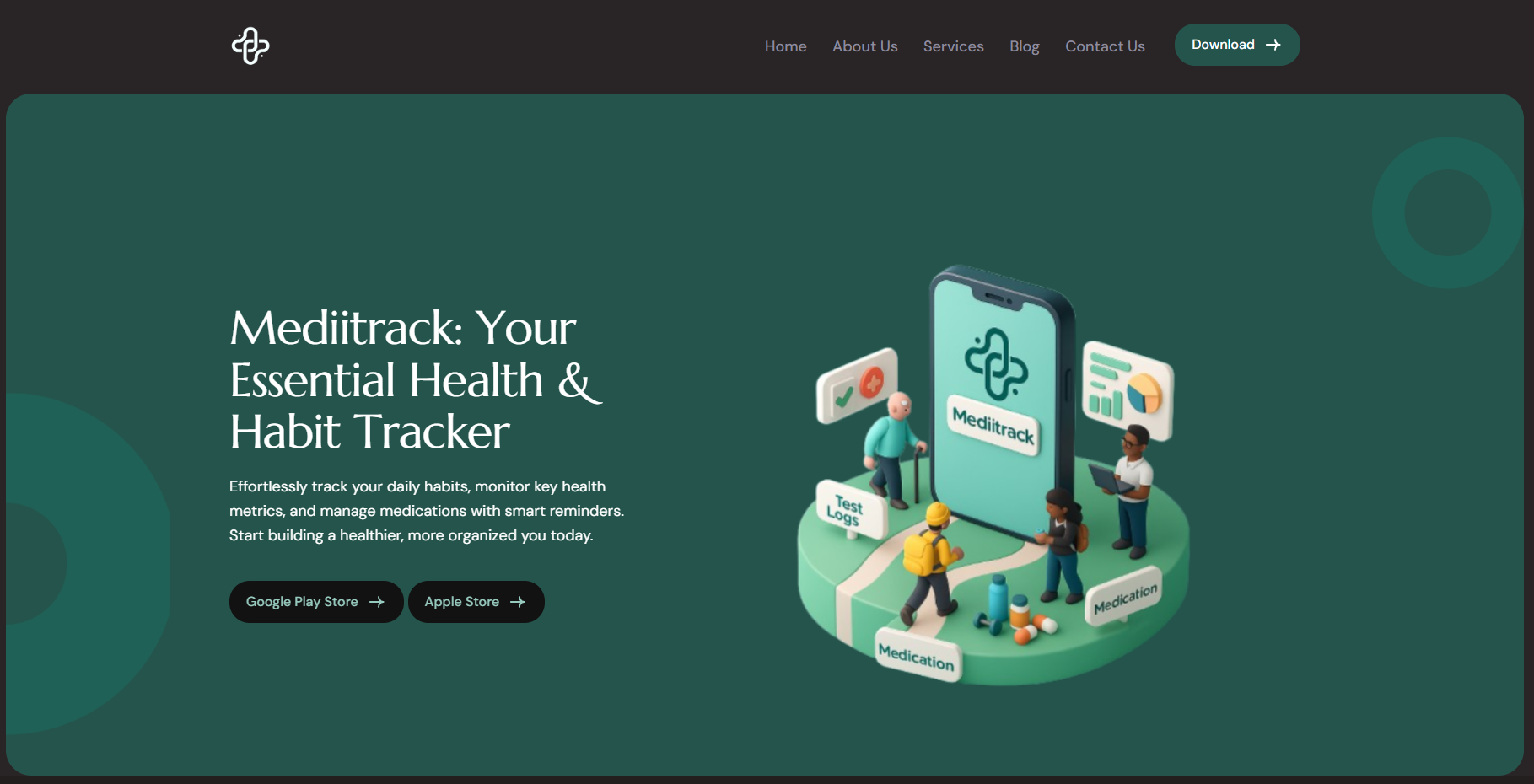
MediITrack is a healthcare platform engineered to streamline patient record management and appointment synchronization in one place. The audience splits cleanly in two:
On one side, clinics, doctors, and healthcare providers looking to modernize how their day-to-day actually runs.
On the other side, patients who need a frictionless way to book visits and stay on top of their own health history without chasing it across phone calls, paper folders, and outdated portals.
Both groups have been underserved by the current state of healthcare software. MediITrack is the bridge being built between them.
The Problem That Set It in Motion
Healthcare administration is fragmented in ways that quietly cost everyone involved. Clinic staff burn entire shifts managing overlapping schedules and pulling apart disjointed records, some digital, some physical, none of them talking to each other. Patients sit on the other end of that mess, fighting clunky booking systems and rarely getting any real visibility into their own medical history.
That double-sided friction is the gap MediITrack was created to close. One source of truth. Less administrative bloat on the provider side. Real access on the patient side.
How the Idea Took Shape
The thinking behind MediITrack didn't come out of thin air. The founder runs Shapebytes, a tech firm where the daily work involves looking at complex systems and figuring out how to make them faster, cleaner, and easier to scale. That background in full-stack development and SaaS architecture trains a particular instinct: when you keep seeing the same inefficiency in the same industry, you stop walking past it.
Watching local healthcare facilities handle data and scheduling made the picture clear. There was a real, unmet demand for a unified, modern solution, and the technical foundation to build it was already familiar territory.
The Hardest Part in the Beginning
Getting the database architecture right was the real hill to climb early on.
Patient records aren't a forgiving data type. The backend has to be fast, secure, and built to scale from day one, with no room for shortcuts that come back to bite you a year in. While the heavy technical work of structuring all that data was happening in the background, the founder was simultaneously putting together a professional pitch deck to articulate the bigger vision to future partners.
Two demanding tracks running in parallel. A lot of late nights. The kind of early-stage period that doesn't look glamorous from the outside but quietly determines whether the product survives its own growth.
What Sets Medi I Track Apart
The differentiator is the link between scheduling and record-keeping, and how tightly those two functions are stitched together.
Plenty of tools out there will give you a calendar. Plenty of others will give you a digital filing cabinet. MediITrack does something the existing market hasn't done well: it synchronizes them. When a patient books an appointment, their full medical history is already organized, surfaced, and ready for the provider on the other side. No tab-switching. No separate logins. No administrative scramble in the ten minutes before the appointment.
It's the kind of integration that sounds obvious until you realize how rare it actually is in real-world healthcare software.
Who Stands to Gain the Most
Independent medical practices, clinics, and healthcare professionals who feel the daily weight of administrative work and want a cleaner, more tech-forward way to manage their patient base.
These are practitioners who didn't go to medical school to become part-time software jockeys, but who have ended up doing exactly that because the tools available to them haven't caught up to the work. MediITrack is built to give that time back.
The Feature Worth Highlighting
The appointment synchronization engine.
This is the piece that turns the product from "another scheduling tool" into something operationally different. It cuts down on scheduling conflicts, shortens wait times, and creates a smoother experience for both the staff working the front desk and the patients walking through the door.
In a category where every minute saved compounds across hundreds of patients a week, that engine isn't a feature. It's the spine of the whole system.
A Day in the Founder's World
The MediITrack founder is based in Jodhpur, and the day starts with a 10 km commute before any of the actual work begins.
From there, the schedule is a constant exercise in context switching. Operations across his digital and software agencies. Oversight of a local hospitality business he owns. And then deep, focused stretches of code and database work for MediITrack itself.
It's a load that demands ruthless prioritization, and it produces the kind of operator who is comfortable shifting between strategic decisions and hands-on technical building, sometimes in the same hour.
What's Currently Being Built
Two priorities are getting the most attention right now.
The first is the database architecture. As the user base grows, every decision made at the foundation either pays off or punishes the team later. The current focus is making sure that foundation scales cleanly, with no compromises on speed or security.
The second is the pitch deck. Sharpening the value proposition, tightening the growth roadmap, and making sure the case for partnerships is articulated as clearly as the product itself.
Strong product. Strong story. Both being built deliberately, in parallel.
Where to Try It
MediITrack is live and accessible.
The mobile app is available on the Google Play Store: play.google.com/store/apps/details?id=com.meditrack
The website lives at mediitrack, where clinics, providers, and patients can learn more and get started.
For independent practices feeling the weight of fragmented admin work, the platform is already there waiting.
Final Thoughts
Healthcare doesn't suffer from a lack of dedication. It suffers from a lack of infrastructure that respects the time of the people delivering and receiving care. MediITrack is being built to give that time back, by treating scheduling and patient records as one connected problem instead of two separate ones. Quiet, structural improvements like this don't always make headlines, but they're often what actually changes how a clinic feels to walk into.